Trends


Two terms broke out of nowhere in the Rising Trends database this spring, and they tell the same story from opposite ends of the market. "Garmin Cirqa" — a device Garmin has not even officially announced — went from zero searches through all of 2025 to 49,500 in May 2026. In the same window, "Fitbit Air" jumped from a flat ~50 monthly searches to 673,000 in May 2026 after Google shipped it. Neither device has a screen.
That is the whole signal. For a decade the wearables story was about cramming more screen onto your wrist — more apps, more notifications, more glanceable everything. The 2026 breakout is the opposite bet: take the screen away, stop pinging the user, and sell the one thing a smartwatch is actually bad at — quiet, continuous recovery and sleep data. Below we walk through what these devices are, who is building them, the subscription-versus-hardware war underneath, what the science on recovery tracking actually supports, and where this goes next.
Key takeaways:
Let's get into it.
Start with the primary signal. Here is the monthly search volume for "Garmin Cirqa," pulled straight from our database. What is striking is not just the climb — it is that this is demand for a product that does not officially exist.
Search interest: "Garmin Cirqa"
Monthly Google search volume (US) · Source: Rising Trends database
Now put it next to its bigger sibling. When Google actually shipped a screenless tracker at $99, the demand was an order of magnitude larger. This second chart compares the two screenless wearables in our cluster at their May 2026 peak.
Screenless wearable searches (May 2026)
Source: Rising Trends database · US monthly search volume
That gap is the most useful thing in the data. The premium, leaked, enthusiast-targeted Garmin band built a real audience on rumor alone. But the moment a trusted brand put a screenless recovery tracker on shelves for under a hundred bucks, the category went mainstream overnight. Both signals point the same way: people want the band, not the screen.
For most of the smartwatch era, the wrist computer competed with your phone. It showed texts, ran apps, lit up constantly, and needed a nightly charge. A screenless recovery wearable throws all of that out and keeps one job: measure your body continuously, 24/7, and tell you how recovered you are.
There is no display. You do not interact with the device — you interact with an app on your phone, usually the next morning. The hardware is a sensor pod (optical heart rate, SpO2, skin temperature, sometimes ECG) on a soft band, designed to be so light you forget it is there and so power-efficient it runs for a week or more between charges. The output is not steps and notifications. It is recovery, strain, sleep stages, and heart rate variability — the metrics that tell you whether to push hard today or back off.
The pitch is "less screen, more signal." A smartwatch adds inputs to your day. A recovery band subtracts them, then hands you one number that summarizes how your nervous system is doing. For a culture increasingly worried about overstimulation and sleep — the same anxiety driving the sleep hygiene trend we track — that subtraction is the entire value proposition.
Whoop created the category. The company spent years selling a screen-free band almost entirely to athletes, on the then-unusual idea that the hardware should disappear and the insight should live in software. Its 2025 lineup, WHOOP 5.0 and WHOOP MG, pushed that further — 14-day battery, second-by-second heart rate, and medical-grade features like ECG and blood pressure insights on the top tier. Whoop proved a screenless band could command a premium, and in January 2026 it became the official wearable partner of the Ferrari Formula One team, the kind of validation that signals a category has arrived. The whole market that followed is, in IDC's own words, chasing Whoop.
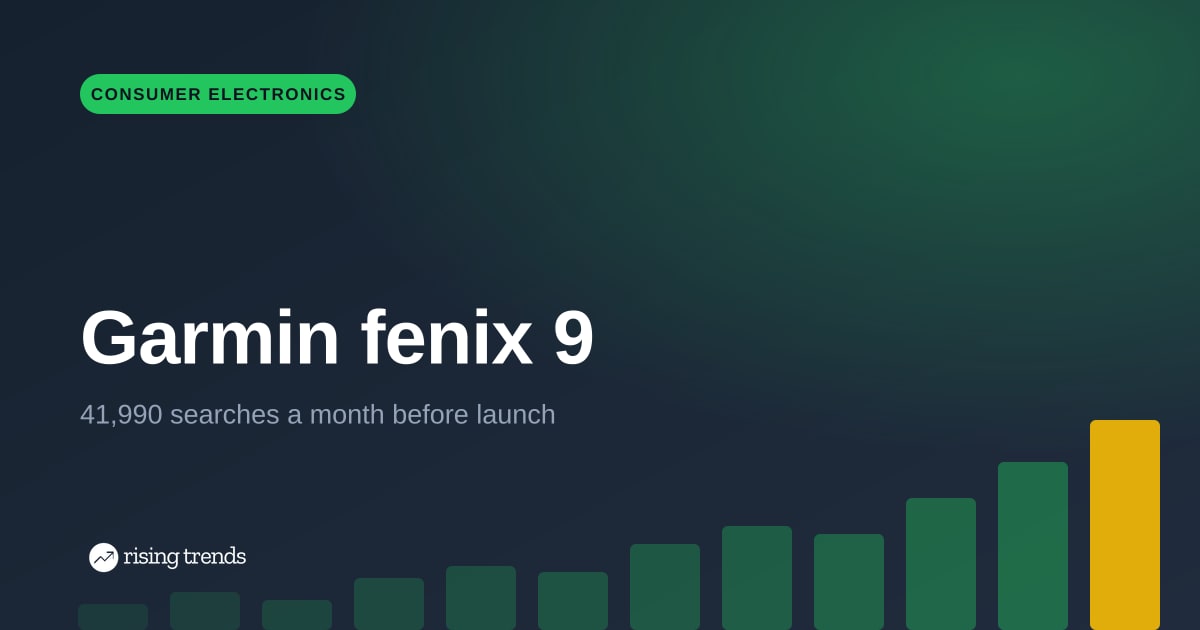
Garmin is the enthusiast response. The Cirqa isn't official yet, but the paper trail is real. Garmin filed a USPTO trademark for "CIRQA" on February 25, 2026, describing a wearable for "measuring and analyzing recovery from physical and emotional stress, human alertness level, and performance" — almost a textbook definition of the Whoop lane. A product page briefly surfaced on Garmin's own site in January 2026 before being pulled. For Garmin, a screenless recovery band is a natural extension: the company already owns the serious-athlete audience with its watches, and a 24/7 recovery band is the piece its lineup was missing. That pre-announcement demand pattern is not a one-off either, as our breakdown of the Garmin fenix 9 shows: 41,990 people a month were searching for that watch in July 2026, a month before Garmin confirmed it existed.
Google is the mass-market response. On May 7, 2026, Google officially launched the Fitbit Air, a $99.99 screenless "pebble" tracker it calls "so comfortable, you'll forget it's there." It does 24/7 heart rate, heart rhythm monitoring with AFib alerts, SpO2, HRV, and full sleep-stage tracking, with up to a week of battery and a five-minute fast charge that buys a full day. There is a $129.99 Stephen Curry special edition with an airflow-engineered band. Crucially, every unit ships with a three-month trial of Google Health Premium — which is the tell for what is really going on here.
Underneath the product story is a business-model war, and it explains why everyone wants into this category.
Whoop's model is subscription-first: you don't buy the band, you join. Whoop's membership tiers run from roughly $199/year (WHOOP One) to $264 (Peak) to $399 (Life), and the hardware comes included. There is no upfront device price to sticker-shock you, and the recurring revenue is far more valuable than a one-time hardware sale. It is the Peloton lesson applied to a wristband: sell the membership, give away the metal.
Garmin is the opposite — a hardware-margin company. Leaked Cirqa pricing has floated around $370–$500, a one-time purchase with no mandatory subscription, consistent with how Garmin sells everything. You pay once, you own it, the data is free. That "you own it" promise is being tested across consumer tech right now, and gaming is the sharpest example: our breakdown of Xbox Disc to Digital shows what happens when a company converts things you bought outright into licenses it can revoke.
Google is trying to have it both ways. The $99 Fitbit Air is priced to move volume at hardware near-cost, but the three-month Google Health Premium trial reveals the actual plan: get the cheap sensor on millions of wrists, then convert them to a recurring health-coaching subscription. The hardware is the customer-acquisition cost; the AI coaching is the product.
That is three of the biggest names in wearables converging on the same form factor with three different ways to make money from it. When that happens, you are not looking at a fad. You are looking at a category that everyone has decided is worth fighting over.
Here is where we cut through the marketing. Recovery bands sell themselves on HRV and sleep, so the honest question is: how good is consumer-grade recovery data, really?
The answer is "decent and improving, but device-dependent." A 2025 validation study in Physiological Reports tested nocturnal resting heart rate and HRV from five consumer wearables against a clinical ECG reference across 536 nights of data (Dial et al., 2025). The finding worth internalizing: accuracy varies meaningfully between devices, with resting heart rate generally tracking well while HRV agreement ranged from moderate to strong depending on the hardware. In other words, the metric these bands are built around is real and measurable from the wrist — but not every band measures it equally well, and the marketing number should be taken as a trend line for you, not a lab-grade absolute.
That nuance matters because the entire value of a recovery band is longitudinal. You are not comparing your HRV to someone else's; you are watching your own number move over weeks. For that use case — is my recovery trending up or down — even a moderately accurate sensor worn every single night is genuinely useful. The science supports "track your own trend" far more confidently than it supports "this is your exact clinical HRV." Anyone buying one of these should treat the daily score as a nudge, not a diagnosis.
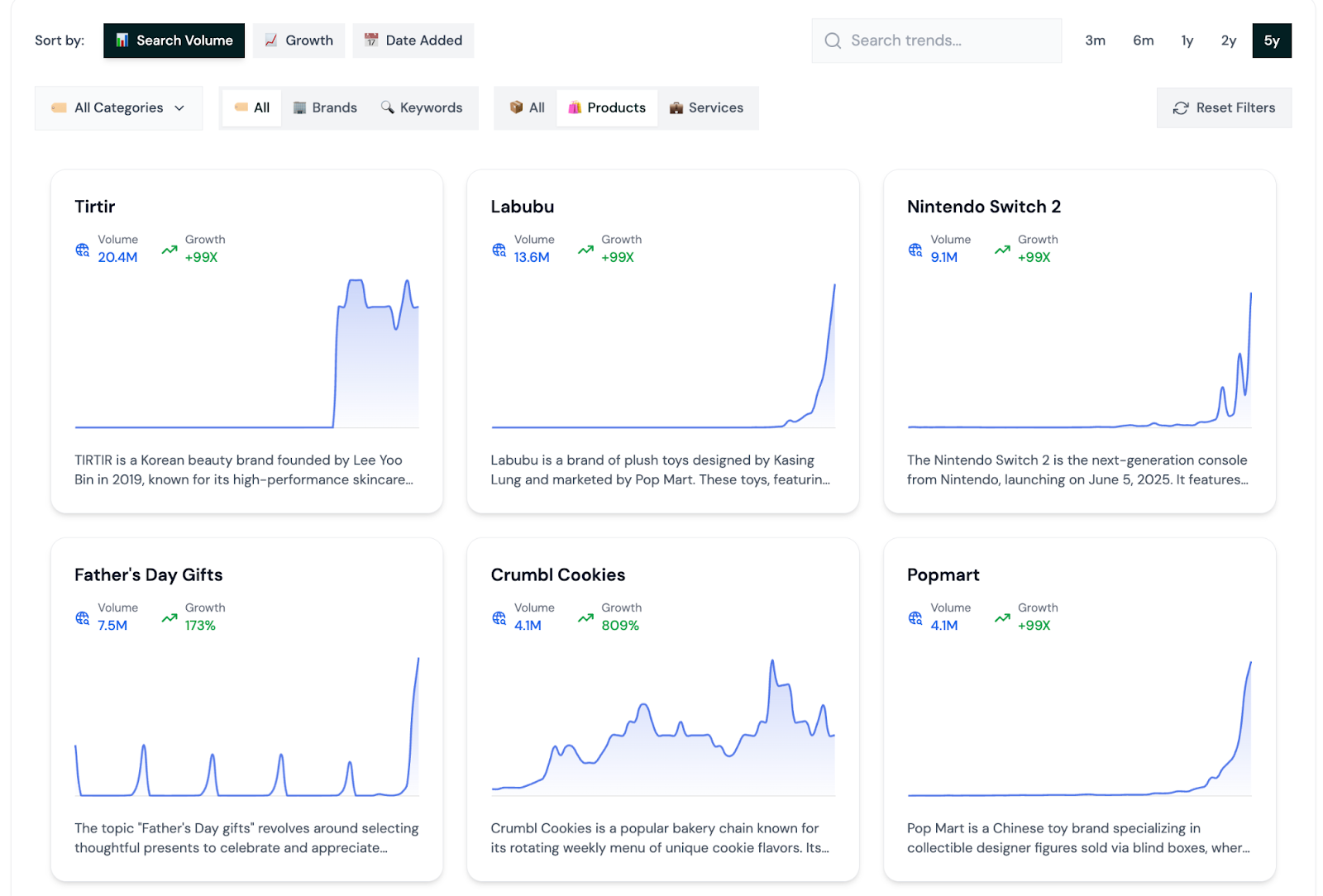
The market data confirms the search data. Global wearable shipments reached 611.5 million units in 2025, and within that, basic wristbands were the fastest-growing category at 14.7%, according to IDC's Worldwide Wearable Device Tracker. IDC's own analysis credits this directly to the rise of screen-free health wearables like Whoop, noting that vendors are pushing wristbands beyond their old role as cheap entry devices and into recovery-focused premium territory.
That is the economic shift in one line: the wristband used to be the bottom of the market, the $30 step counter you bought before graduating to a real smartwatch. Now it is becoming a destination product — a deliberate choice by people who already own a smartwatch and want something quieter for the other 23 hours of the day. We mapped the broader version of this in our wearable technology trends 2026 coverage: the wrist is fragmenting into a notification device and a recovery device, and they are increasingly not the same device.
The services layer is following. Subscriptions (Whoop's membership, Google Health Premium), AI coaching, and longitudinal health reporting are where the recurring money is. The hardware is becoming a razor; the recovery insight is the blade.
Three things look likely through the rest of 2026 and into 2027.
Garmin ships, and the premium lane gets crowded. The trademark, the leaked store page, and 49,500 people already searching for an unannounced device make a Cirqa launch close to inevitable. When it lands, the recovery-band category will have a genuine three-way fight — Whoop's subscription, Garmin's buy-it-once hardware, and Google's cheap-sensor-plus-subscription — at three different price points. That is healthy for the category and brutal for margins.
Screenless becomes a feature, not a niche. The Fitbit Air's 673,000 searches prove mass-market appetite at $99. Expect every major wearable brand to field a screen-free recovery option, and expect "screenless" to become a checkbox the way "waterproof" did. The interesting tension is whether the smartwatch incumbents cannibalize themselves to get there.
The subscription model is the one to watch. The cheap hardware is a Trojan horse. The real prize is a recurring health-coaching relationship, and Google pricing the Air at $99 with a Premium trial is the clearest signal yet that the wearable is becoming a customer-acquisition tool for a health-data subscription. Whether consumers accept paying monthly for their own body data is the open question that decides who wins.
The signal worth tracking is exactly the one our data caught early: a device with no screen, no official launch, and 49,500 monthly searches. When people line up for a product that doesn't exist and doesn't light up, the market is telling you what it actually wants. It wants the signal, not the screen.
Want to catch the next wearable shift before it hits the shelves? Read our guide on how to identify market trends, follow the live Garmin Cirqa trend page on our dashboard, or browse what is breaking out right now at Rising Trends.
Thousands of Emerging Trends
Thousands of Breakout Apps
Mega Trends
Trend Analysis Tool